An Ode to Test Track 2.0

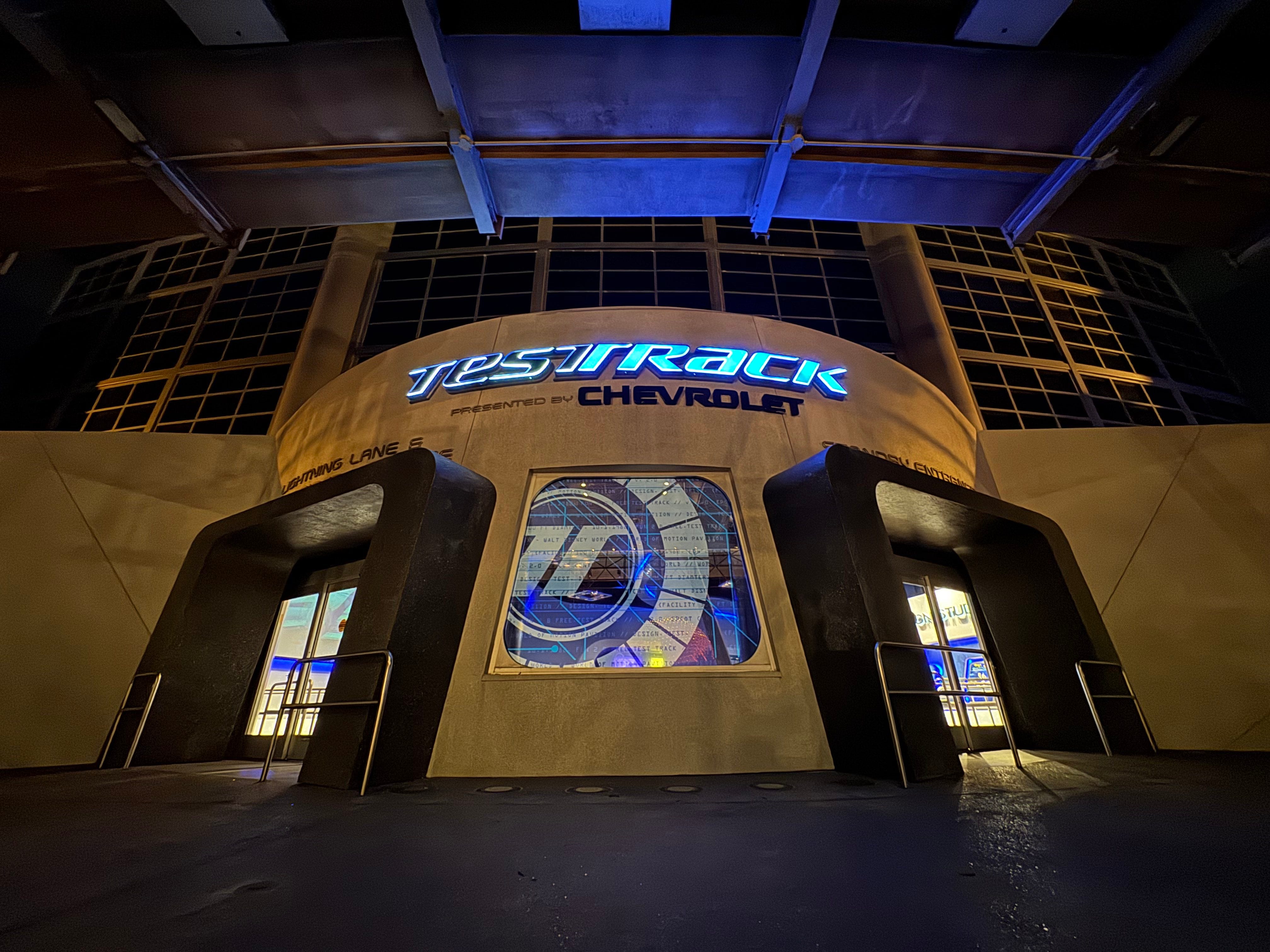
Last June, the EPCOT Transportation Pavilion’s third and shortest-lived attraction, Test Track presented by Chevrolet (unofficially and lovingly dubbed “Test Track 2.0”), shut its doors following an 11-year run. The ride lived a somewhat controversial operational life among the park’s fandom, replacing the beloved and oft-lamented original 1999 Test Track attraction. As a somewhat recurring curse of ride re-themes, discussion of Test Track 2.0 has largely been dominated by the tonal shift and change of direction from the original incarnation of Test Track. Very little do you see people discussing Test Track 2.0 by its merit, 1.0 has always been a sort of “elephant in the room” holding it back. This has always bothered me, and with Test Track’s third incarnation opening this month, I wanted to take one more opportunity to talk about 2.0 before it is likely negated to a footnote in the discussions of its predecessor and successor.
General Motorway
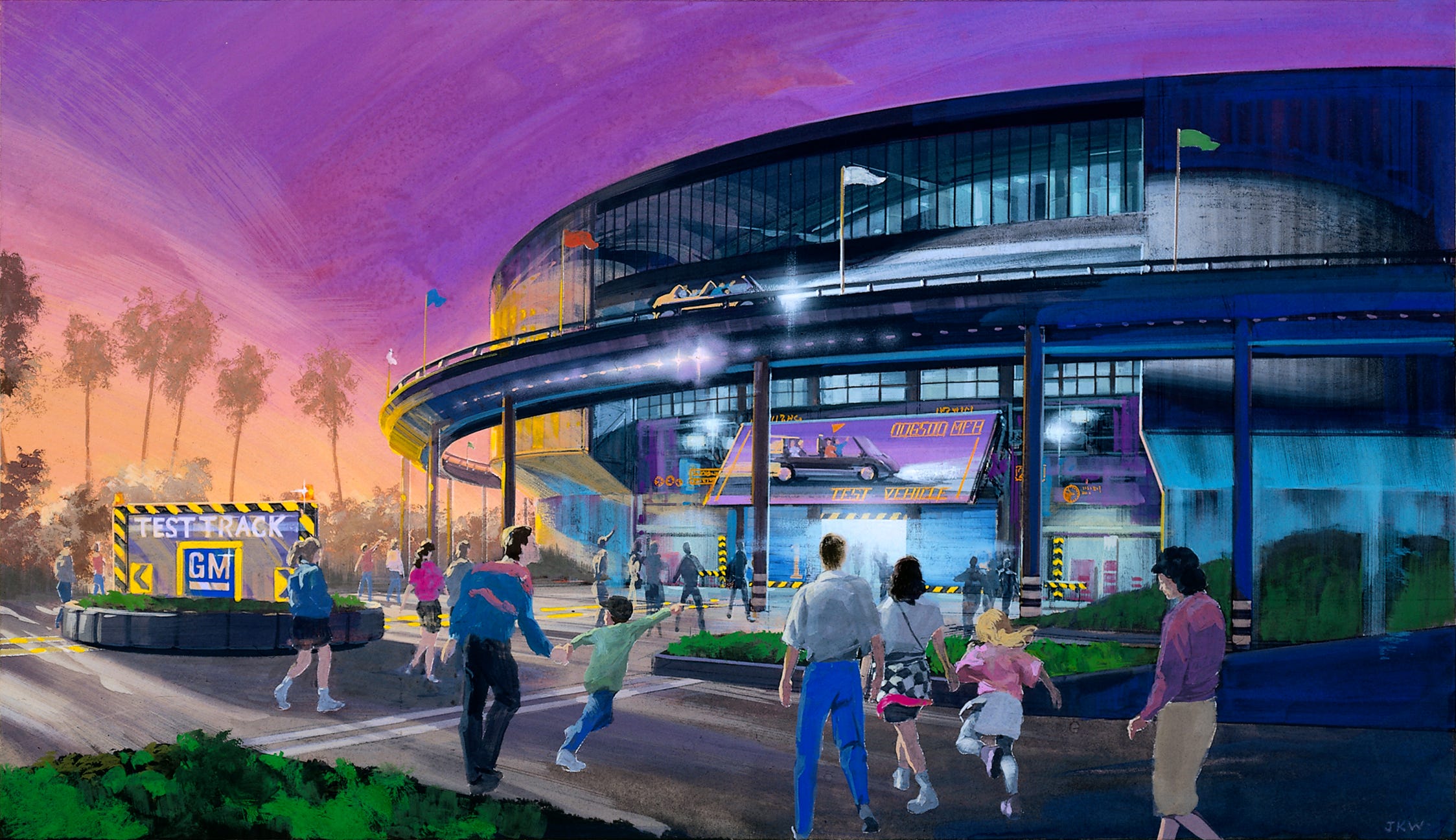
Despite everything stated above, a retrospective on a ride retheme unfortunately always must begin with the attraction it replaced. Test Track presented by General Motors officially opened in 1999 as a high-speed slot-car attraction themed to a vehicle proving ground, replacing GM’s previous exhibit, 1982’s World of Motion. The original Test Track opened as what would become the most ambitious piece of a project that had begun six years prior: the total redevelopment of EPCOT’s original Future World attractions. While many exhibits received light refreshes or new shows using existing infrastructure, Test Track would be Future World’s first new build ride since Wonders of Life’s Body Wars a decade prior. EPCOT had garnered a reputation for its slower-paced attractions, and Test Track’s show building formerly housed one of the park’s several slow-moving Omnimover attractions. Disney wanted that replaced with something thrilling, and General Motors wanted something that focused on advertising their core product - modern motor vehicles. Test Track was born.
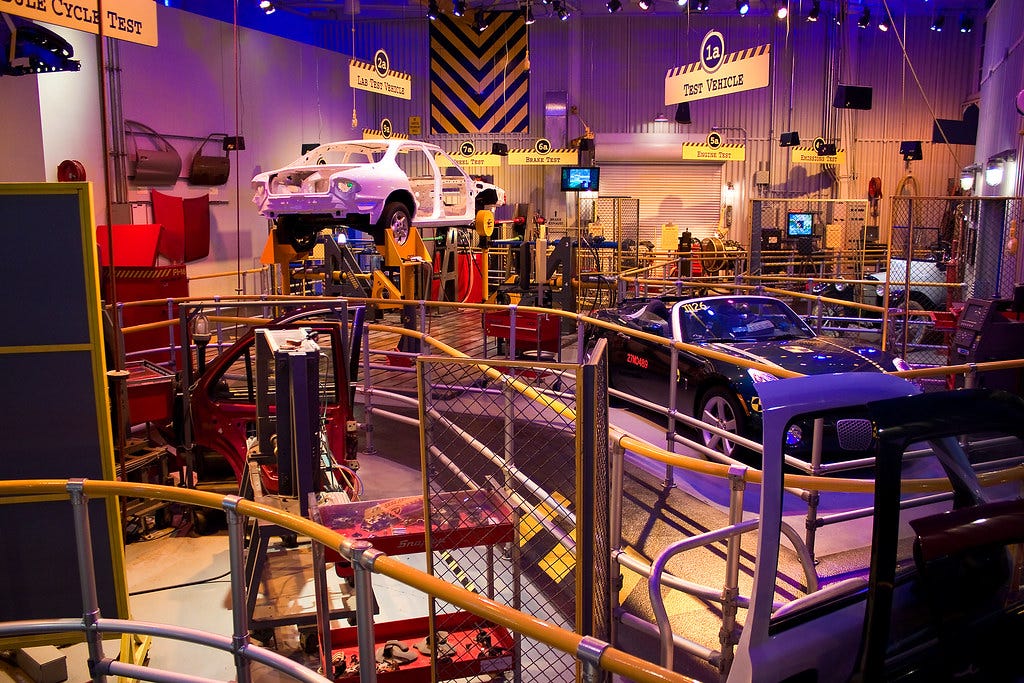
The original Test Track begins with an elaborate queue showcasing various vehicle testing exhibits. These lead to a pre-show where the attraction is explained by its hosts, Bill McKim and Sherrie. In short, you are assuming the role of a crash test dummy inside a test vehicle and will be exposed to various extremes that your vehicle may encounter in the real world. The pre-show exits into the platform where you board. The attraction begins with an incline and leads into rough roads, brake tests, environmental chambers that expose your vehicle to extreme temperatures, a handling course with hairpin curves and additional inclines, a near-miss with a Semi truck, and culminates in the “barrier test”, wherein a neat fake out effect occurs as the rider is set up to believe they will collide into a wall that opens to reveal the exterior high speed course. This concludes the attraction. Operating for 13 years, the original Test Track did not outlive the operational life of its predecessor; however, as EPCOT’s first high-speed thrill ride, it almost certainly gained a larger following. If you’ve held a discussion with me about this before, you’ll know this is a following I don’t entirely understand.
My main issue with Test Track has always been that there is nothing in it that feels like an EPCOT attraction. The building is largely empty, and the attraction is mostly a series of starts and stops. The cold metal industrial aesthetic is antithetical to EPCOT’s warm, welcoming future atmosphere that it cultivated in its first decade. For what it sets out to achieve, the original Test Track is wonderful. It authentically replicates the experience it attempts to as well as you reasonably can for a theme park audience. To me, it’s just that said experience doesn’t clash with EPCOT’s Future World. It focuses entirely on not only the then-present, but the then-present of a specific niche of the automotive industry. Minimal time is spent in the queue reflecting on the legacy of automotive testing, just as minimal time is spent in the post-show on the future of the industry. Test Track feels like the product of the worst of both worlds: a Disney that wanted a thrill ride at EPCOT at any cost and a GM that wanted a commercial at EPCOT at any cost. It doesn’t feel like either party was truly dedicated to something that would fit right in with its neighboring exhibits. I respect that there are people who consider it an “all-time great”, but I feel that it is one of the park’s weaker attractions in retrospect. I believe a large part of its popularity and legacy stems from the fact that it was simply the first proper thrill ride in the park, the “only option” for EPCOT guests seeking something to get their adrenaline pumping. It entertains and informs, but there’s a lack of anything inspirational.
Bowtie Boulevard
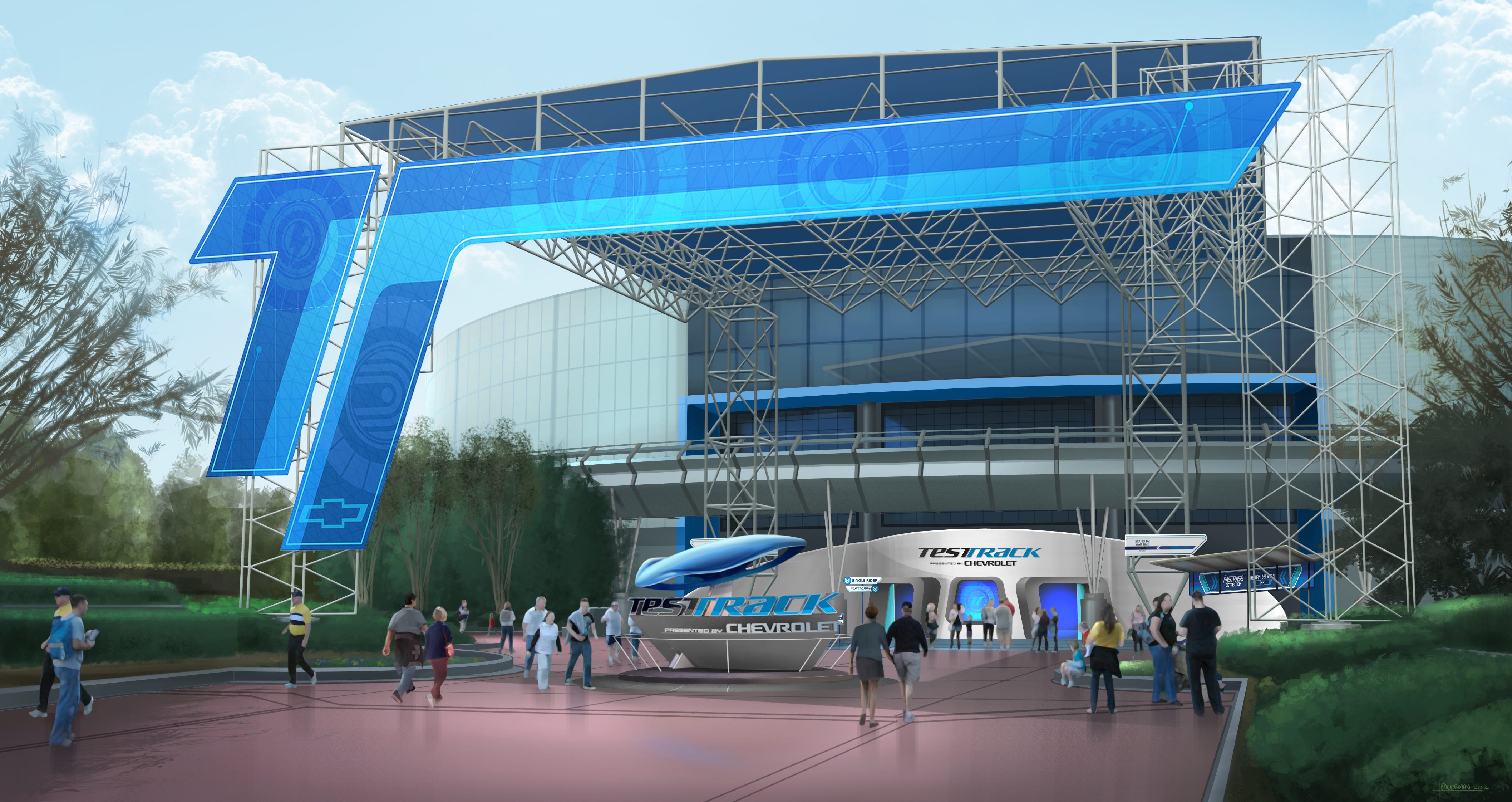
In January 2012, Disney and GM officially announced that they were renewing their corporate alliance once more and would close Test Track that April for their third attraction together. That ride, Test Track 2.0, would open just shy of eight months later. The attraction itself would physically remain the same, but receive a tonal shift to course correct Test Track’s shortcomings and create an experience in line with Future World. Rather than a physical testing facility of the present, Test Track became a digital testing facility of the future dubbed the SimTrack. The original industrial aesthetic of Test Track would be removed and replaced with a sleek, futuristic one, anchored predominantly by cool blues and silvers. A full new soundtrack composed by Paul Leonard-Morgan would tie the experience together and add to EPCOT’s rich musical legacy. Test Track would also drop the broad General Motors name from its sponsorship, in favor of narrowing it down to just the Chevrolet brand. Test Track 2.0 opened in December 2012.
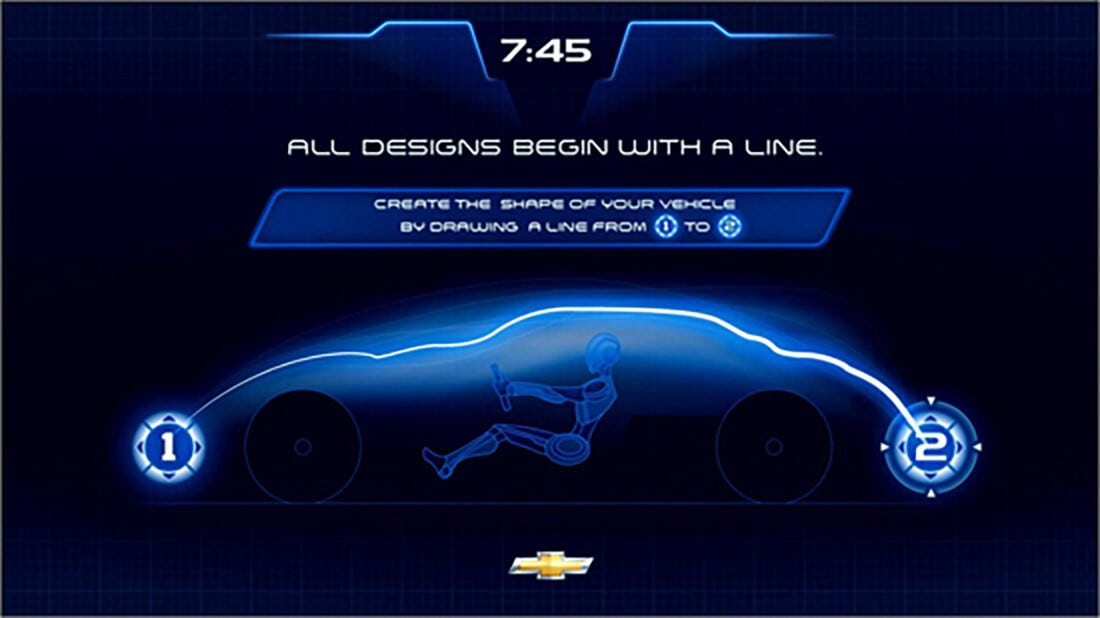
The queue would be gutted and rebuilt from scratch, now centered around the concept of a concept car. Windows that let in natural light in the original Test Track were blacked out, leaving the new queue with total control over interior lighting. After passing displays showcasing concept vehicles and the ideas behind them, guests would be funneled into a hallway with LCD touch screens containing a guest-manipulable line. This showcases the general shape of a vehicle’s body and how that impacts its aerodynamic efficiency - a taste for what was ahead.
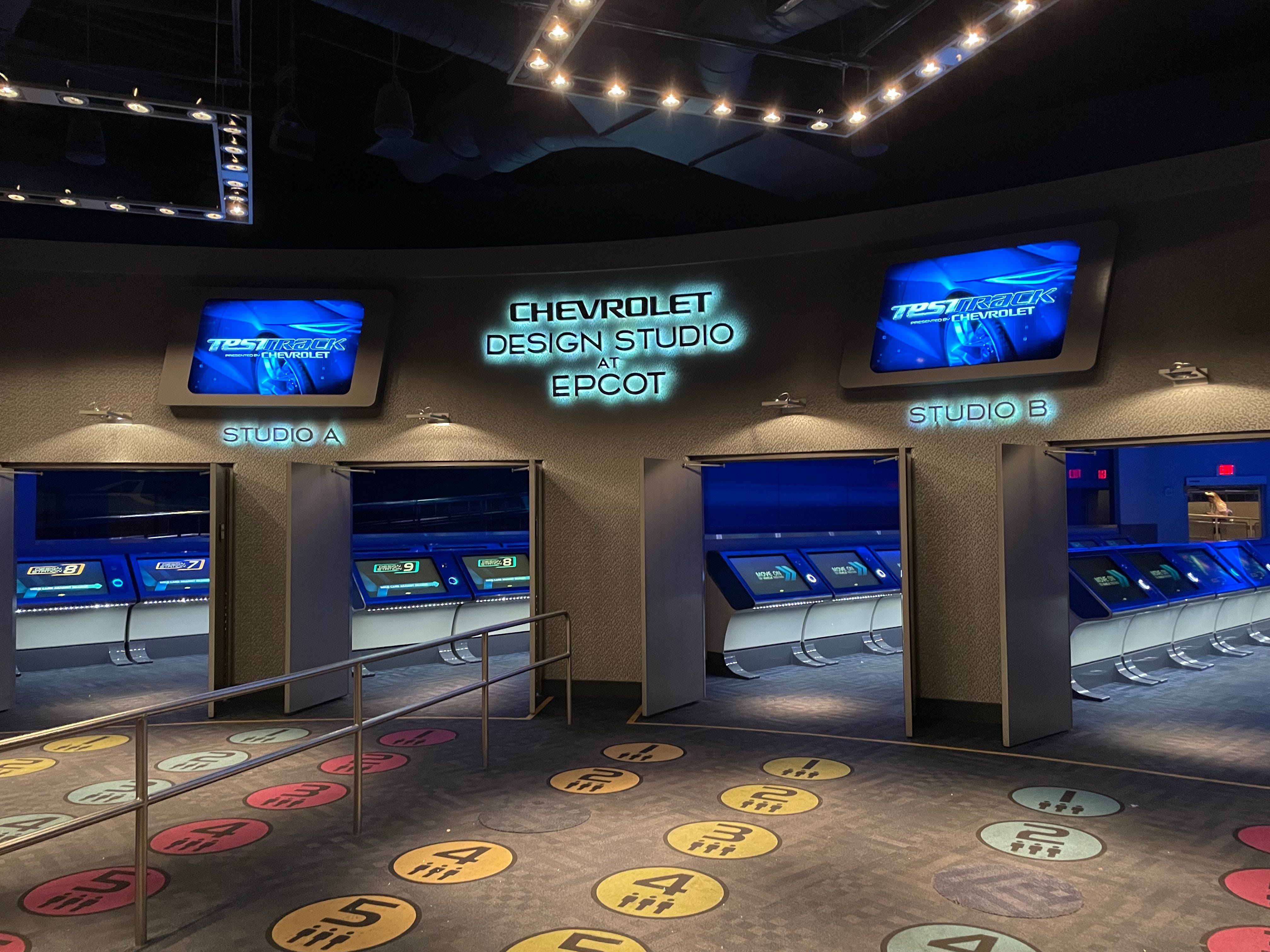
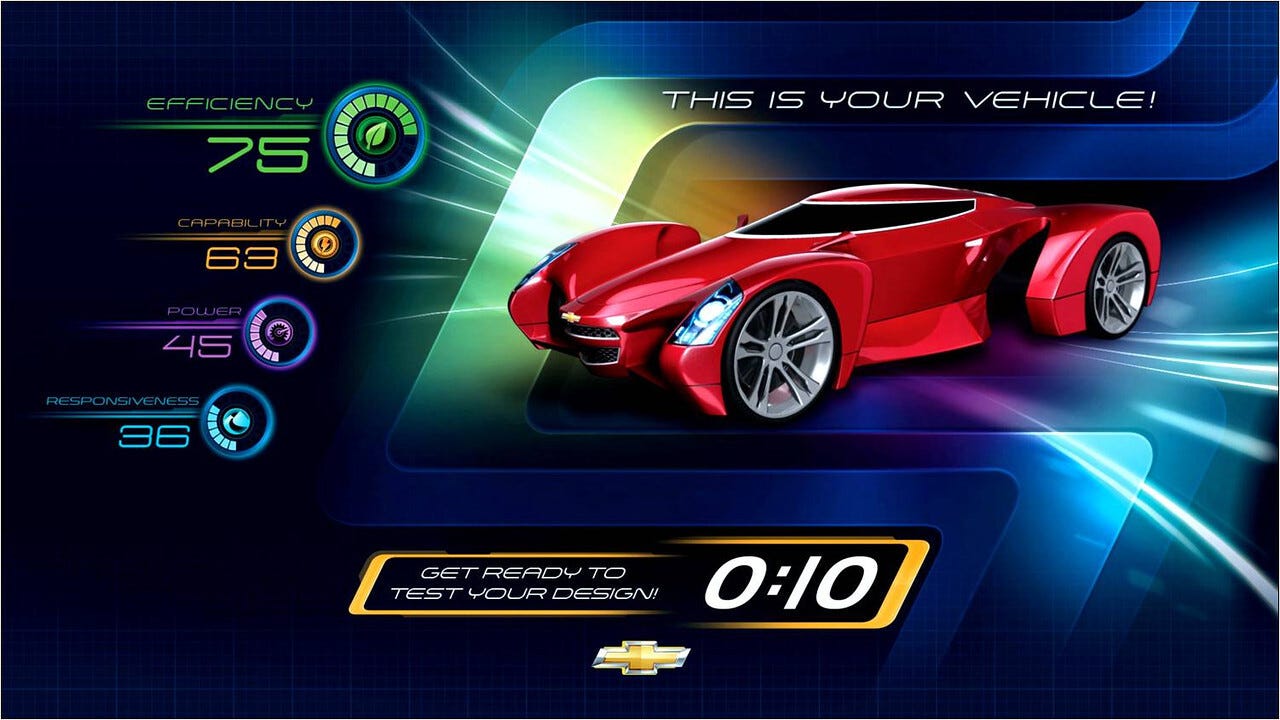
Guests are then ushered into one of two rooms housing the Chevrolet Design Studio at EPCOT, the main new feature anchoring Test Track 2.0. Each party of three or fewer shares a kiosk where they have three minutes to manipulate one of several base 3D models, ultimately creating their own personalized concept car. Apart from manipulating the body of the vehicle, guests can choose their fuel type and add various accessories, each with their own pros and cons. At the end of the experience, their design is rated in four categories: Capability, Efficiency, Responsiveness, and Power, all of which are tests that they would physically experience in the SimTrack. Guest designs are stored on their park admission, either an RFID card or MagicBand, so that they can be carried through to the physical ride experience.
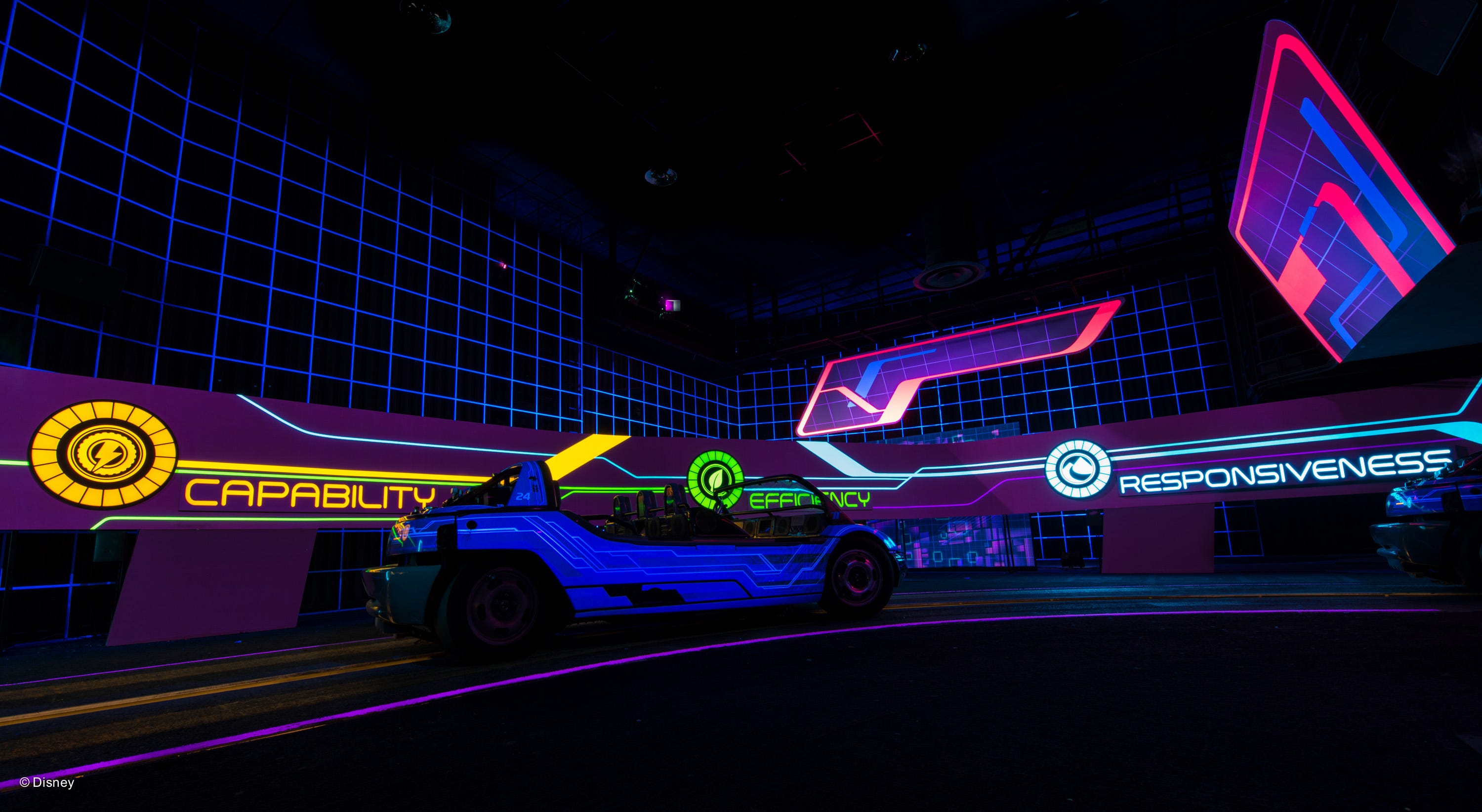
No longer exiting a pre-show directly into the load platform, guests leave the Design Studio and enter additional queue space. This new area funnels guests exiting the design studio in no specific order back into a single file line, then up a ramp and through a curved hallway lining the perimeter of the building up to the load platform. Guests load just as before, with the exception of an RFID scanner to tap your park ticket or MagicBand to as your car arrives at the station. This scanner takes your custom concept car data and assigns it to your SimCar, which then follows you throughout the attraction. Once dispatched into the attraction, the largest change becomes immediately evident; the show space is now lit more like a traditional dark ride rather than flood lights illuminating entire empty areas. Following the same hill climb as in the original attraction, Test Track 2.0 fills the space from the original attraction’s rough road test with an admittedly awkward promotion for GM’s OnStar service. The Brake Test became the Capability Test, simulating off-road and extreme weather conditions. Following the Capability Test, you are introduced to the payoff from your experience in the Design Studio - your Custom Concept Vehicle is competing against the ones created by others in your vehicle. After each test, a screen displays how each vehicle designed by those in the SimCar performed in comparison to each other. This creates an element of both interactivity and competition not present in the original attraction. The environmental chambers from the original attraction have been redone as the Efficiency Test, where your SimCar experiences two scans and a simulated wind tunnel. The Handling Course is largely unchanged from the original attraction, with lasers and blue lights illuminating the 1999 props. This area is now the Responsiveness Test. After an unchanged Semi near-miss scene, your vehicle powers up for the former barrier test, now the Power Test for the outside high-speed course.
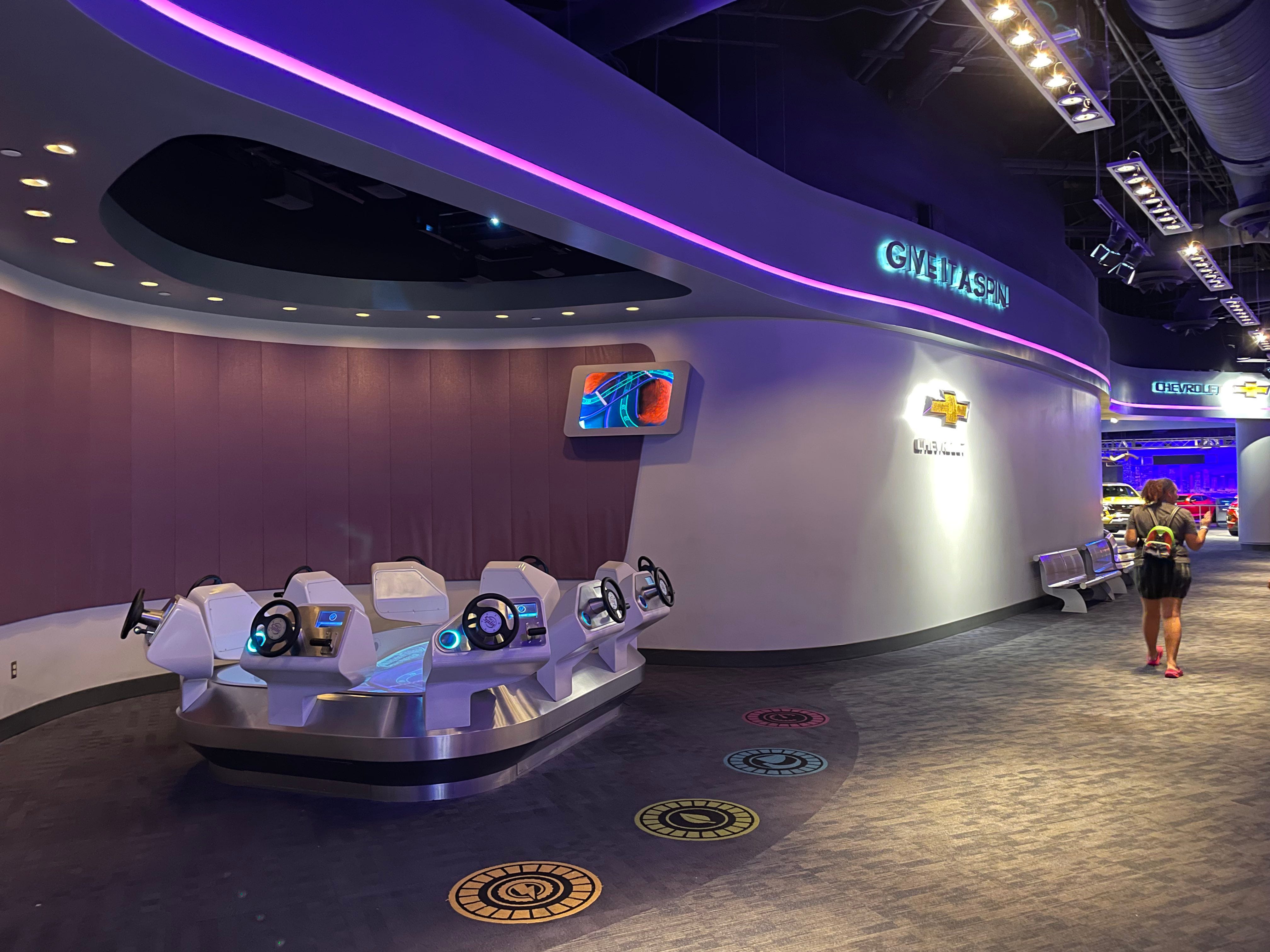
The attraction ends after the high-speed loop just as before, and guests exit into a remodeled post-show exhibit featuring various interactive exhibits and GM vehicles on display. I think it is worth stressing how important the presence of this post-show is; apart from the Test Track attraction, there are now four additional experiences inside the building. Guests first walk through a station to link their on-ride photos to their MyDisneyExperience account, and then into a large room titled “What’s Your Score?”. This exhibit features several MagicBand touchpoints where your custom concept car’s final score can be compared to others designed that day and that month. This room leads into “Design In Motion”, a car showroom which also features kiosks to create your own custom car commercial using the 3D model for your custom concept car. Design in Motion exits into two “Give it a Spin” rooms, where your custom concept car can be linked to a racing game where you can race against others and their own concept cars. If for whatever reason you weren’t able to design your own concept car in the queue, were unsatisfied with it, or otherwise did not experience the Test Track attraction, additional design kiosks were present in the post-show to create as many cars as you pleased. Only one car could be linked to your park admission at a time, however, and if no car is linked to your admission, any kiosk using that data would simply randomly generate a vehicle for you to use.
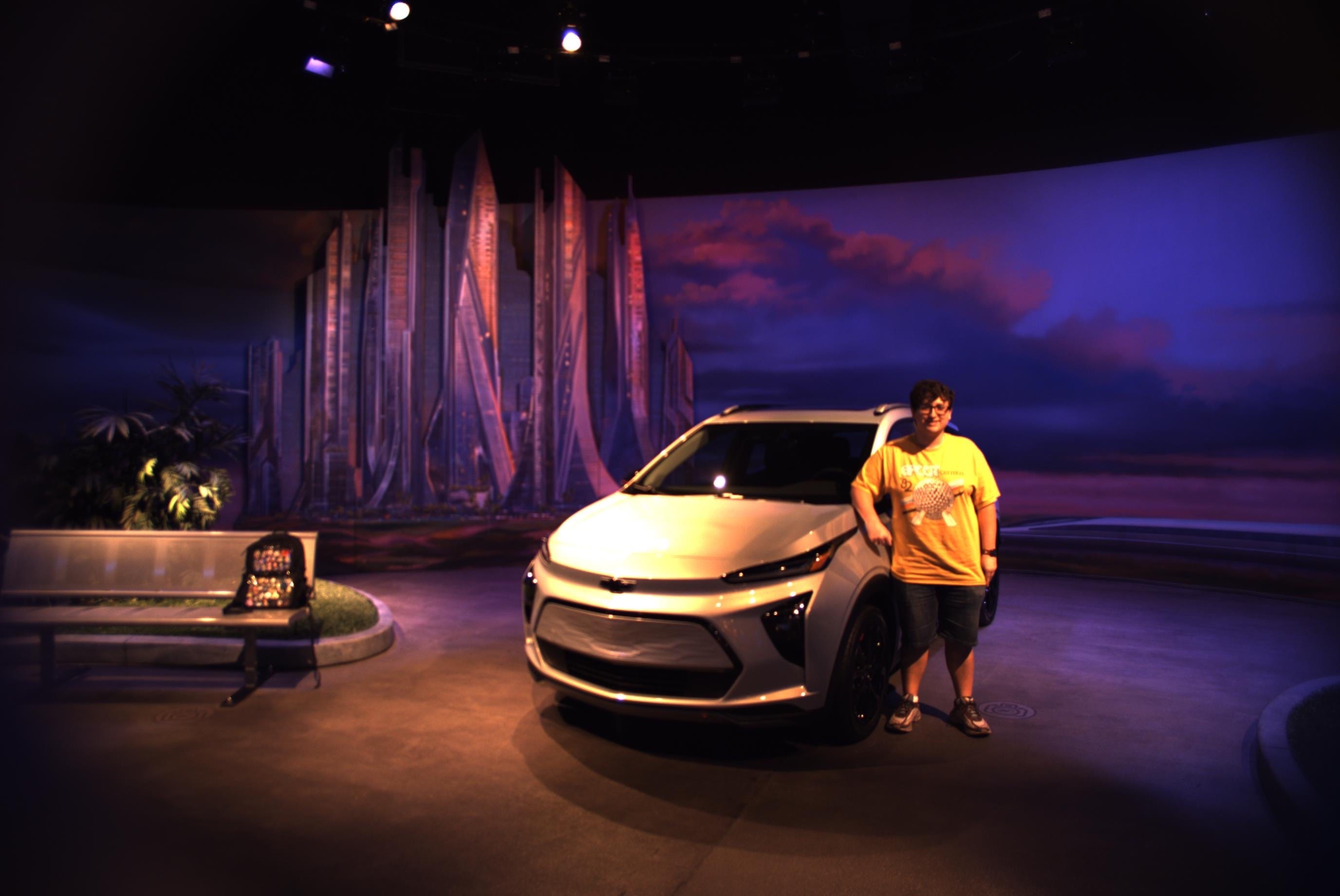
The main attraction in the Chevrolet Showroom is, as it has been since 1982, the new GM vehicles on display. Kids and Adults alike could share the joy of getting behind the wheel of a new car, and more importantly for GM, hopefully be able to sway those in the market for a new vehicle towards one of the ones they had on display. Guests could talk with GM representatives, look at the vehicles and their posted information, and new for Test Track 2.0, take pictures with select cars at designated photo op kiosks. The photo kiosks were something of a Disney rarity as well - free! I myself fell victim to the showroom trap, as in 2022, the Chevrolet Bolt EUV went on sale and a floor model made it to EPCOT. I have fond memories of going to check out that car every time I was at Test Track, watching it move from the very front of the room to the very back. Last month, my car’s engine blew, and after an exhaustive month of getting my ducks in a row and car hunting, I came home with a Bolt EUV. It’s the same silver color as the floor model I spent years checking out at EPCOT. They got me good.
Why Test Track 2.0?
Now that I’ve covered Test Track 2.0 and how it came to be, I suppose that begs the question of “why?”. To me, Test Track 2.0 is a glimpse into the 2010s EPCOT that we never had. The 2010s were a decade of stagnation for EPCOT, Test Track 2.0 and Soarin’ Around the World were the only new Future World attractions that opened, while we also lost Universe of Energy, Innoventions, anything good in the Magic Eye Theatre, and whatever husk was left of Wonders of Life. Not only was Test Track 2.0 *something*, it was something that felt like EPCOT replacing something that didn’t. Perhaps it didn’t feature a heavy dose of old-school Future World optimism, but it did promote hands-on interaction and provoked thought about the future of a major industry. It also packed a lot of nods in to the pavilion’s original attraction, World of Motion, which I appreciated as an EPCOT fan. Before the EPCOT pavilion icons were “revived” in the 2020s, Test Track 2.0 fully embraced bringing back its retired blue Norm Inuye Wind Tunnel icon, which originally represented World of Motion. It can be seen in several areas in and around the building, as can nods to the pavilion’s former theme song “It’s Fun to Be Free”, and Walt Disney’s Progress City, to name a few.
While the attraction itself may have ultimately been more style than substance, even just a futuristic aesthetic does so much for me over the original ride. Much of modern EPCOT is aesthetic only with no follow-through, but Test Track 2.0 does at least attempt to have some meat on its bones. I certainly don’t think it can be considered objectively worse when so much of Test Track 1.0 remained present with new lighting installed. I believe the Design Studio kiosks, while often the subject of complaints from re-riders (Mostly Annual Passholders who didn’t realize you could just skip it), were a great way to break up your time in line and offered a distinctly EPCOT activity. I think the fandom at large often loses sight of the fact that most people experiencing these attractions will only do so once in their lives. In the same sense that Wonders of Life could potentially sway youth into an interest in the medical field, giving kids an interactive window into the world of automotive design, even if gamified for a theme park audience, could provoke a similar spark.
At worst, Test Track 2.0 is a bold swing that falls flat for some. At best, it’s a little bit of OG EPCOT magic brought into the true 21st century. A large part of EPCOT’s identity which has been erased over the years is found in smaller activities like the Design Studio, and it warms my heart almost more than the actual ride overlay to have seen so many present here. This is especially true for an attraction like Test Track that not everyone can experience. Exhibits and games are fun for all, even those who can’t ride the ride. In an era of puzzling EPCOT additions such as Cosmic Rewind, which doesn’t really seem to know what it wants to be at any given time, it’s refreshing that Test Track 2.0 was a complete experience and one that was sure of itself. Test Track 2.0 closed on June 17th, 2024, replaced by a third overhaul to the same 1999 attraction opening July 22nd, 2025. I have gotten the chance to experience Test Track 3.0 myself and have quite a few thoughts about it (as you can imagine), but before I create a write-up about that, I wanted to give Test Track 2.0 its due. I hope that with this post, you can at least view this attraction through my eyes as we let it settle into Yesterland. Test Track 2.0 is very close to my heart, and while I love to see things at this park evolve in the right direction, a portion of me will always miss it.